
Women’s Leather Jacket Size Guide: Find Your Perfect Fit
Choosing the right leather jacket size is about more than picking the same size you normally wear. A jacket needs to sit correctly at the shoulders, feel comfortable through the bust and waist, and give your arms enough room to move. Small differences in fit can change both comfort and the way the jacket looks.
This women’s leather jacket size guide uses Vault Leather Jackets’ actual women’s size chart and explains how to measure your bust, waist, shoulders, sleeve length and jacket length. You will also learn how a leather jacket should fit, what to do when you are between sizes, and how different jacket styles can affect the fit you prefer.
Women’s Leather Jacket Size Chart
Vault’s women’s size chart covers XS through 2XL and provides bust, waist, shoulder, sleeve and jacket-length measurements in both inches and centimeters. Use your body measurements as the starting point, then compare them with the chart below.
| Size | Bust (inch) | Bust (cm) | Waist (inch) | Waist (cm) | Shoulder (inch) | Shoulder (cm) | Sleeve (inch) | Sleeve (cm) | Length (inch) | Length (cm) |
|---|---|---|---|---|---|---|---|---|---|---|
| XS | 31–33 | 79–84 | 25–27 | 64–69 | 14–14.5 | 36–37 | 22.5–23.5 | 57–60 | 21–21.5 | 53–55 |
| S | 33–35 | 84–89 | 28–29 | 71–74 | 14.5–15 | 37–38 | 23.5–24.0 | 60–61 | 21.5–22 | 55–56 |
| M | 35–37 | 89–94 | 30–31 | 76–79 | 15–15.5 | 38–39 | 24.0–24.5 | 61–62 | 22–22.5 | 56–57 |
| L | 37–39 | 94–99 | 32–34 | 81–86 | 15.5–16 | 39–41 | 24.5–25.0 | 62–64 | 22.5–23 | 57–58 |
| XL | 40–42 | 101–106 | 35–37 | 89–94 | 16–16.5 | 41–42 | 25.0–25.5 | 64–65 | 23–23.5 | 58–60 |
| 2XL | 43–45 | 109–114 | 38–40 | 97–102 | 17–17.5 | 43–44 | 25.5–26.0 | 65–66 | 23.5–24 | 60–61 |
These measurements come directly from Vault’s existing Leather Jacket Size Guide. Product designs can have different silhouettes, so it is also worth checking the individual product page before ordering.
How to Measure for a Women’s Leather Jacket
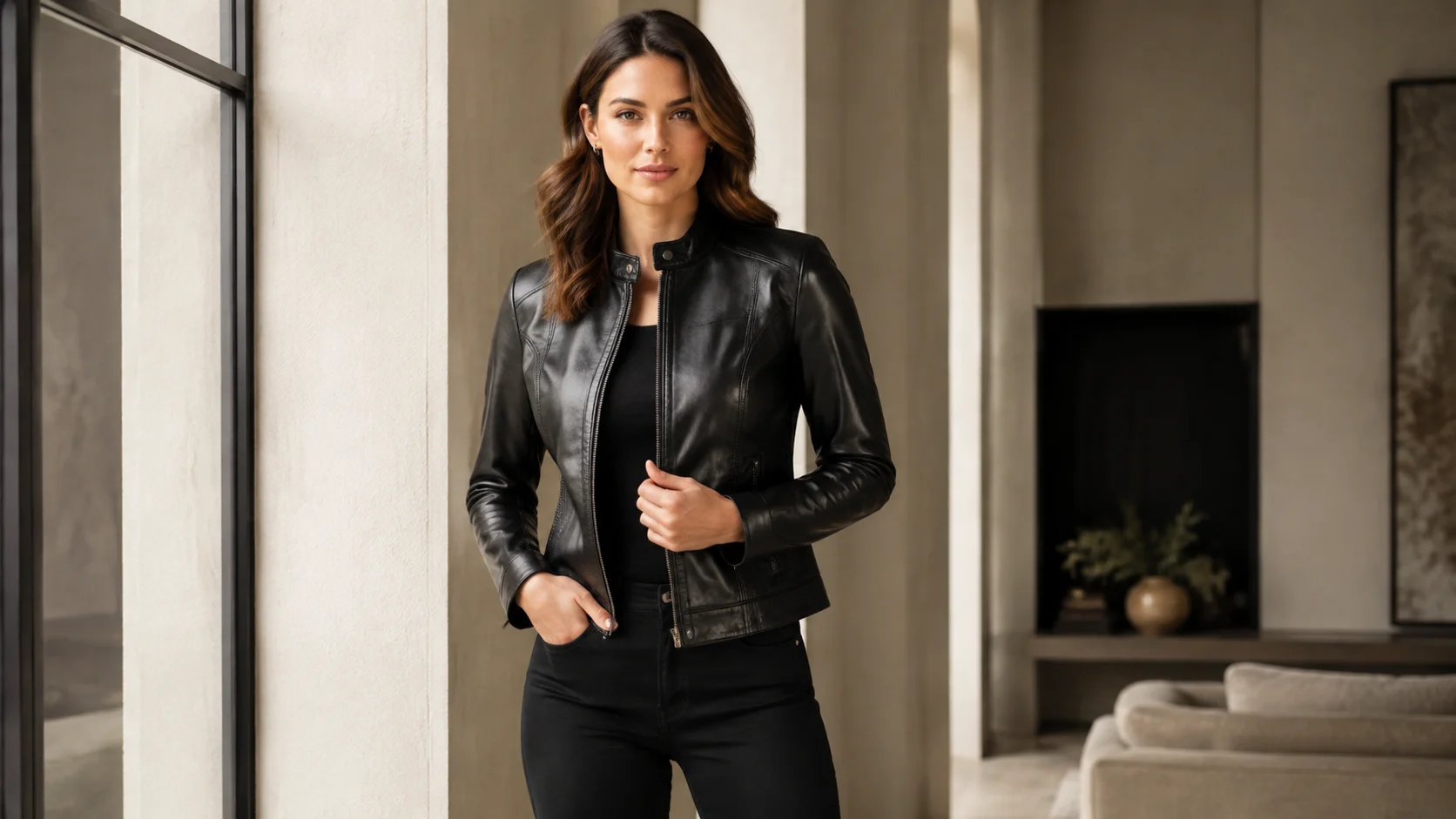
For the most useful results, use a flexible measuring tape and take your measurements while standing naturally. Keep the tape level and comfortable. It should touch the body without digging in or hanging loosely.
Bust Measurement
Wrap the tape around the fullest part of your bust, keeping it level across your back and under your arms. Stand normally and avoid holding your breath or pulling the tape tight.
Your bust is one of the most important women’s leather jacket measurements because it helps determine how comfortably the jacket will close and how much room you have for movement.
Waist Measurement
Measure around your natural waist, usually the narrowest part of your torso. Keep the tape comfortable and do not pull your stomach in while measuring.
Waist measurement becomes particularly useful when choosing a more shaped or fitted jacket. A jacket can fit well at the bust but still feel restrictive through the waist if this measurement is overlooked.
Shoulder Measurement
Measure from one natural shoulder point to the other across the upper back. Keep the tape following the natural shoulder line rather than wrapping it around the front.
Shoulder fit is important because the shoulder seam is one of the hardest parts of a structured leather jacket to overlook. If it sits too far down the arm, the jacket can look oversized; if it pulls inward, movement can feel restricted.
Sleeve Length
Start at the shoulder point and measure down the outside of the arm toward the wrist. Keep your arm relaxed and slightly bent rather than held rigidly straight.
When checking women’s leather jacket sleeve length, remember that cuffs and styling can change where the sleeve visually finishes. Use Vault’s published sleeve range as your main reference.
Jacket Length
Measure vertically from the shoulder area down to where you want the jacket to finish. Keep the tape straight and consider whether you prefer a cropped, classic or longer silhouette.
Vault’s chart gives a specific length range for each size, but the intended style also matters. A bomber and a blazer may have very different proportions even when the body measurements are similar.
How Should a Women’s Leather Jacket Fit?
The right fit should feel secure and comfortable without making ordinary movement difficult. A leather jacket can be close to the body without feeling restrictive, but the best fit depends on the style and how you plan to wear it.
- Shoulders: The shoulder seam should sit close to your natural shoulder point. Unless the design is intentionally oversized, it should not fall far down the upper arm.
- Bust: The jacket should close without excessive pulling across the front. You should be able to breathe normally and move your arms without the leather feeling strained.
- Waist: A shaped jacket should follow your waist without digging in or creating constant tension when you sit or move.
- Sleeves: Sleeves should reach around the wrist area in a way that suits the design. They should not cover a large part of your hands unless that is intentionally part of the style.
- Jacket length: The hem should sit where the style is designed to finish and where you feel comfortable wearing it.
- Arm movement: Try reaching forward, bending your arms and lifting them naturally. A structured jacket should still allow normal everyday movement.
- Layering: Think about what you will wear underneath. A close-fitting jacket over a T-shirt will feel very different from the same size worn over a sweater.
A fitted feel follows the body more closely, a regular fit gives a little more everyday room, and a relaxed fit provides more space for layering. None is automatically better; the right choice depends on the jacket style and the look you want.
How to Choose the Right Women’s Leather Jacket Size
- Take accurate measurements. Record your bust, waist, shoulders, sleeve length and preferred jacket length.
- Compare them with Vault’s women’s size chart. Look at the complete set of measurements instead of relying on one number.
- Identify the closest size. Use your actual measurements rather than assuming your usual dress, top or coat size will be identical across brands.
- Consider intended fit and layering. Decide whether you want a closer, regular or more relaxed feel and think about what you will wear underneath.
For more style context, you can also read Vault’s Women’s Leather Jackets 2026 Guide, which covers the main women’s leather jacket styles and fit considerations.
What If You’re Between Two Sizes?
If your measurements fall between two size ranges, do not decide from a single measurement alone. Compare your bust, waist, shoulder and sleeve measurements together and think about the fit you want.
If you are near the upper end of one size and plan to wear thicker layers, the next available size may provide a more comfortable starting point. If you prefer a closer fit and normally wear lighter layers, the smaller option may suit your intended look better. The important thing is to consider the complete set of measurements and the jacket’s silhouette.
Common Women’s Leather Jacket Sizing Mistakes
- Choosing only by normal clothing size: Clothing sizes vary between brands and styles. Your usual size is a useful reference, but body measurements are more reliable.
- Ignoring bust measurement: Bust fit affects how comfortably the jacket closes and how the front sits when you move.
- Ignoring shoulder fit: Shoulder placement strongly affects the overall shape of a structured jacket.
- Ignoring sleeve length: A jacket can fit well through the body but still look or feel wrong if the sleeves are significantly too long or short.
- Forgetting about layering: Consider whether you will wear a T-shirt, blouse, knitwear or another layer underneath.
- Measuring incorrectly: A twisted tape, an angled measurement or pulling the tape too tightly can produce misleading numbers.
Women’s Leather Jacket Fit by Style
Fit expectations can change with the style of jacket. The same size can look and feel different in a bomber, biker, blazer or puffer because each silhouette is designed with a different purpose.
Bomber Jackets
Women’s leather bomber jackets often have a relaxed or structured shape with a defined hem and cuffs. If the design is oversized, you may want room through the body and arms without choosing a size based only on the visual volume of the jacket.
For example, Vault’s Women’s Leather Bomber Jacket Oversized Vintage Style has a relaxed oversized silhouette, so the intended fit should be considered alongside the size chart.
Biker Jackets
Biker jackets often have a closer, more shaped profile. Bust and shoulder measurements deserve particular attention because a noticeably oversized fit can change the intended structure of the jacket.
Blazer Jackets
A leather blazer generally benefits from a clean shoulder line and controlled room through the bust and waist. It should look polished while still allowing comfortable arm movement.
Puffer Jackets
Puffer jackets have more built-in volume and are often worn in colder conditions. Consider the layers you expect to wear underneath rather than comparing their visual bulk directly with a slim leather jacket.
Trucker Jackets
Trucker jackets often have a shorter, more structured silhouette. Pay close attention to shoulder placement, bust comfort and jacket length so the proportions sit where you expect them to.
Leather Vests
Leather vests remove sleeve length from the sizing equation, but bust, waist and shoulder measurements still matter. Think about the layers underneath because a vest is often styled over shirts, sweaters or other outerwear.
Women’s Leather Jacket Size Guide FAQs
How do I know what size women’s leather jacket I need?
Measure your bust, waist, shoulders, sleeve length and preferred jacket length, then compare those measurements with Vault’s women’s size chart. Your body measurements are a better starting point than your usual clothing size alone.
Should a women’s leather jacket fit tight or loose?
It should feel secure without restricting normal movement. A fitted, regular or relaxed feel can all be appropriate depending on the jacket style and how you plan to layer it.
Should I size up in a leather jacket?
Not automatically. Compare your measurements with the chart first. If you are close to a size boundary, consider your preferred fit and whether you will wear heavier layers underneath.
How do I measure my bust for a leather jacket?
Wrap a flexible tape around the fullest part of your bust, under your arms and across your shoulder blades. Keep it level and comfortable without pulling it tight.
What should I do if I’m between sizes?
Compare your bust, waist, shoulder and sleeve measurements together, then consider the style and the amount of layering you want. Choose based on the closest overall match rather than one measurement by itself.
How should the shoulders of a leather jacket fit?
The shoulder seam should generally sit close to your natural shoulder point. If it drops noticeably down the arm on a non-oversized style, the jacket may be too large; if it pulls inward or restricts movement, it may be too small.
Find Your Perfect Women’s Leather Jacket Fit
The most useful leather jacket size guide for women is one that replaces guesswork with real measurements. Take a few minutes to measure your bust, waist, shoulders, sleeve length and preferred jacket length, then compare the results with Vault’s women’s chart.
When you are ready to explore styles, start with Women’s Leather Jackets and narrow your choice by silhouette, from Women’s Bomber Jackets and Women’s Blazers to Women’s Biker Jackets, Women’s Puffer Jackets, Women’s Trucker Jackets and Women’s Leather Vests.
If you want a broader selection, visit the Vault shop. For the most accurate sizing reference, keep the full Leather Jacket Size Guide open while taking your measurements. Taking the time to get the fit right makes it easier to choose a jacket you will feel comfortable wearing again and again.