
Genuine Leather vs Faux Leather Jackets: What’s the Difference?
Choosing a leather-look jacket can be confusing. Two jackets may look similar in a product photo, yet differ in how they feel, age, need to be cared for, and fit your budget. The biggest distinction is the material: genuine leather is made from animal hide, while faux leather is designed to imitate leather using synthetic or other alternative materials.
Neither option is automatically right for every person. A well-made jacket should match your priorities, whether that means natural texture, easier day-to-day care, a lower upfront price, or a material that aligns with your personal values. This guide compares the practical differences so you can make an informed choice before buying.
What Is Genuine Leather?
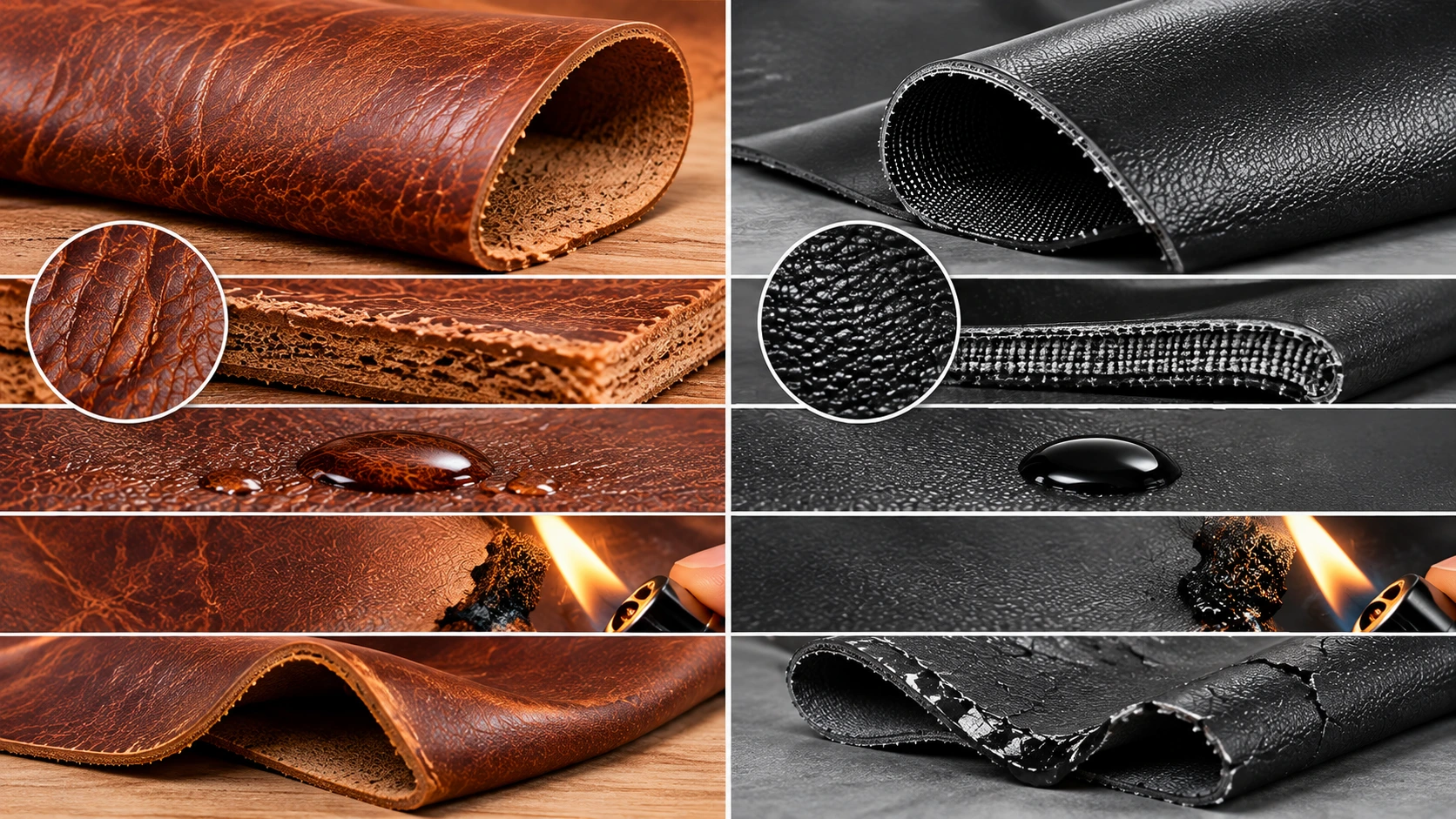
Genuine leather is made from treated animal hide. Its surface can show natural grain, subtle variations, and markings, so two pieces may not look perfectly identical. The exact feel and performance depend on the type and grade of leather, how it has been finished, the quality of construction, and how the jacket is used.
Many people choose genuine leather for its distinctive texture and the way it can develop character over time. With appropriate care, a quality leather jacket may remain wearable for many years. However, the words “genuine leather” alone do not guarantee premium quality. Hide selection, tanning, stitching, lining, zippers, and overall construction all matter.
What Is Faux Leather?
Faux leather is a material made to resemble leather without using animal hide. Common versions use a textile base with a plastic coating, such as polyurethane (PU) or polyvinyl chloride (PVC). Other alternatives may use different coatings or plant-derived components, so the label and material details should be checked rather than assuming every faux leather product is made the same way.
Faux leather can offer a consistent surface, a range of finishes, and a lower initial price in many cases. It may also appeal to shoppers who prefer not to wear animal-derived materials. Its lifespan varies with the formulation, coating thickness, construction, frequency of wear, storage, and exposure to heat or moisture. Some faux leather can crack or peel as it ages, but the rate differs between products.

Genuine Leather vs Faux Leather: Key Differences
| Feature | Genuine leather | Faux leather |
|---|---|---|
| Material | Treated animal hide | Material designed to imitate leather, often a coated textile |
| Appearance | Natural grain and subtle variations are common | Often more uniform, although finishes can vary |
| Feel | Can feel supple, firm, or textured depending on the hide and finish | Can feel smooth, soft, or coated depending on its construction |
| Ageing | May develop a patina and soften with use and care | Usually aims to retain its original surface; some coatings may crack or peel |
| Durability | Can last for years when material quality, construction, and care are good | Varies by formulation and build; surface wear can limit its lifespan |
| Maintenance | May need suitable conditioning and protection for its specific finish | Often cleaned with a soft cloth and mild care methods recommended by the maker |
| Upfront cost | Often costs more, depending on leather and craftsmanship | Often more budget-friendly, though premium alternatives can cost more |
| Environmental considerations | Uses animal hide and involves tanning and finishing impacts | May rely on fossil-derived plastics and can be difficult to recycle; alternatives differ |
This table is a general guide, not a guarantee about every jacket. Always review the product’s material description and care instructions. Price alone does not tell you how well a jacket is made.
Which Type of Leather Jacket Lasts Longer?
A well-constructed genuine leather jacket can have a long useful life, especially when it is stored properly and cared for according to its finish. Natural leather may soften and develop surface character instead of simply keeping the same appearance. Scratches and scuffs may be visible, but some can be addressed with appropriate leather-care products or professional repair.
Faux leather durability depends heavily on the material and coating. A well-made piece can serve well for regular fashion use, but lower-quality coatings may dry out, crack, or peel, particularly if the jacket is repeatedly folded, exposed to heat, or stored in poor conditions. Once a surface coating starts peeling extensively, repair can be difficult.
There is no universal lifespan that applies to every jacket. Consider the quality of the material, seams, lining, hardware, how often you will wear it, and whether you are prepared to maintain it. If you want a jacket to wear for many seasons, compare construction details as carefully as the material label.
Comfort, Appearance and Everyday Wear
Comfort depends on more than whether a jacket is genuine or faux leather. Weight, lining, cut, fit, ventilation, and the clothing worn underneath all affect how it feels. Genuine leather can feel structured at first and may soften with wear, although some finishes remain firm. Faux leather can be lightweight or structured, and its feel varies from one product to another.
In appearance, genuine leather often has natural grain variation, while faux leather can provide a more consistent finish. Neither look is inherently better. Think about how you plan to style the jacket: a classic biker jacket, a bomber, a blazer-style design, and a relaxed everyday jacket all create different effects regardless of material.
For online shopping, check the close-up photos, material details, lining description, fit notes, and size chart. If you are between sizes or prefer a particular fit, review the measurements before ordering. Vault’s leather jacket size guide can help you compare measurements.
Genuine Leather Jacket: Pros and Cons
Potential advantages
- Natural grain and individual texture that can make each jacket look distinctive.
- Quality leather can develop character and soften with appropriate use and care.
- A well-made jacket may remain wearable for many years.
- Can be found in a wide range of classic silhouettes, from biker and bomber styles to blazers.
Things to consider
- Often has a higher initial cost than many faux leather options.
- Requires care suited to its finish, and prolonged moisture or heat can cause damage.
- It is animal-derived, which may not suit every shopper’s preferences.
- Quality varies, so the label alone should not replace a close look at construction and product details.
Faux Leather Jacket: Pros and Cons
Potential advantages
- Often offers a lower upfront price and a wide choice of colours and finishes.
- A uniform surface may suit shoppers who prefer a consistent look.
- Some options are suitable for people avoiding animal-derived clothing materials.
- Many faux leather jackets can be cleaned with simple methods when the care label permits.
Things to consider
- Some coatings can crack or peel with age, wear, heat, or unsuitable storage.
- It may not develop the same natural patina associated with genuine leather.
- Plastic-based materials can present end-of-life and recycling challenges.
- “Faux leather” covers multiple materials, so performance can differ significantly between products.
How to Choose the Right Jacket for Your Needs
Instead of asking which material is always best, start with how you will use the jacket and what matters most to you.
- Think about your budget: Compare the total value and expected use, not only the initial price. A higher price is not by itself proof of better quality.
- Consider how often you will wear it: If it will be a regular part of your wardrobe, examine the construction, fit, lining, and care requirements closely.
- Choose the look you prefer: Natural grain and changing character may appeal to you, while a consistent finish may suit your taste better.
- Be realistic about maintenance: Follow the care instructions and consider whether you are comfortable using products intended for the specific material.
- Check your material preference: Genuine leather is animal-derived. Faux leather avoids animal hide, but its exact composition should be checked if material sourcing or environmental impact is important to you.
- Check the fit and construction: Look at shoulder seams, sleeve length, fastening, lining, and the way the jacket sits when zipped or buttoned.
If you are exploring different silhouettes, browse the men’s leather jacket collection or the women’s leather jacket collection. Read each product’s own material specifications before deciding which option is right for you.
How to Care for Genuine and Faux Leather Jackets
Care for genuine leather
- Follow the care label and the recommendations for the specific finish.
- Wipe light surface dirt with a soft cloth; avoid soaking the material.
- Let a wet jacket dry naturally away from direct heat, radiators, or strong sunlight.
- Use a leather conditioner only if it is suitable for that leather and finish. Test products on a discreet area first.
- Store on a broad hanger in a cool, dry, ventilated place. Avoid sealing it in plastic for long periods.
Care for faux leather
- Check the care label before using any cleaning product.
- For routine cleaning, use a soft cloth lightly dampened with water if the manufacturer permits it.
- Avoid harsh solvents, abrasive scrubbing, and unapproved leather conditioners, which may damage the coating.
- Keep the jacket away from excessive heat and store it so the surface is not tightly creased.
- Allow it to dry naturally and avoid machine washing unless the care label explicitly permits it.
Neither material should be assumed waterproof. Water resistance depends on the material, finish, seams, and any treatment applied. If the jacket gets wet, follow its care instructions rather than applying heat or an unverified product.
Frequently Asked Questions
Is genuine leather better than faux leather?
It depends on your priorities. Genuine leather may appeal to shoppers who value natural texture and the potential to develop a patina. Faux leather may suit people who want a lower-cost option or prefer not to wear animal hide. Material quality and construction matter for both.
Does genuine leather last longer than faux leather?
A well-made genuine leather jacket can last for many years with appropriate care, while some faux leather coatings may crack or peel. However, lifespan varies by product quality, use, storage, and maintenance, so no material label guarantees a specific result.
Can faux leather peel or crack?
Yes. Some faux leather surfaces can crack or peel as the coating ages, especially with repeated flexing, heat, or poor storage. The likelihood depends on the material and its construction.
Is genuine leather waterproof?
No. Genuine leather should not automatically be considered waterproof. Water resistance varies by finish and treatment, and prolonged moisture can stain or damage some leather. Follow the manufacturer’s care guidance.
Is faux leather always vegan?
Faux leather is generally designed as a non-animal alternative to leather, but do not assume every product marketed with a leather-like name has the same composition. Check the product’s material information and any relevant sourcing claims.
How can I check whether a jacket is genuine leather?
Start with the product label and seller’s material description. Natural grain may show variation, but appearance alone is not conclusive because finishes can imitate texture. Avoid risky burn tests or damaging the jacket. If buying in person, ask the seller for clear material information.
Explore Leather Jacket Styles at Vault Leather Jackets
The right jacket is the one that fits your style, comfort needs, material preferences, and budget. Before ordering, review the material details, size information, construction, and care guidance on the individual product page.
Explore men’s leather jackets, women’s leather jackets, and the wider Vault shop to compare available designs. For a closer look at the brand and its collections, visit the Vault Leather Jackets homepage.
Final Thoughts
Genuine leather and faux leather can both have a place in a wardrobe, but they offer different material characteristics, care needs, and ageing behaviour. Compare the specific jacket rather than relying on a broad label: construction, finish, fit, and the way you plan to wear it are all important. With those details in mind, you can choose a jacket that suits your needs with confidence.
Image placement recommendations: Featured image after the introduction; material texture comparison within the key differences section; care/lifestyle image within the care section. Add images and meaningful alt text once actual image files are available.